

A code is a starting point
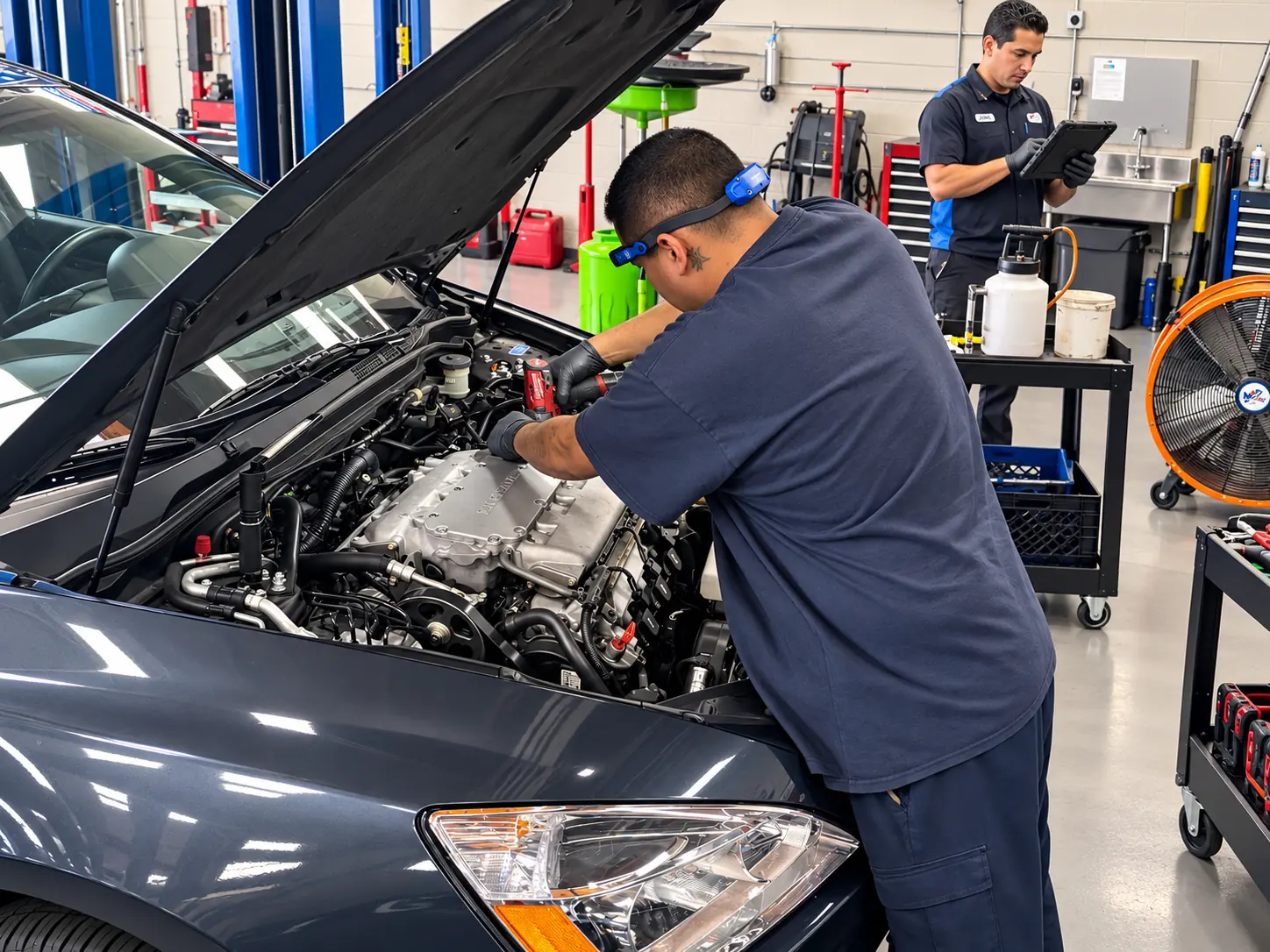
When a warning light comes on, the vehicle’s computer stores a trouble code. The code names the circuit or system that reported a problem. It does not name the failed part. A code for an oxygen sensor, for example, can be set by the sensor, by wiring, by an exhaust leak or by a fuel mixture problem. Diagnosis is the testing that separates those possibilities.
What diagnosis involves
- Reading stored codes and freeze-frame data
- Watching live sensor data while the engine runs
- Testing circuits, connectors and components
- Smoke testing for vacuum and evaporative leaks when needed
- A road test to reproduce the concern
- Checking manufacturer service information for known issues
When to stop driving
A steady check engine light means the vehicle should be looked at soon. A flashing light usually means an active misfire, which can damage the catalytic converter. If the light is flashing, or you also see a temperature or oil pressure warning, pull over when it is safe and call us.
More than the check engine light
We diagnose ABS, traction control, airbag, charging system, transmission and hybrid system warnings, along with problems that do not set a light at all: rough running, hard starting, stalling, poor fuel economy and noises.
What happens after the diagnosis
We explain what we found in plain language, show you the evidence when we can, and sort the findings: what needs attention now, what should be planned for, and what is fine. You decide what gets done.