
Signs your brakes should be checked
- Squealing or grinding when you stop
- A brake pedal that feels soft or sinks
- Vibration in the pedal or steering wheel under braking
- The vehicle pulls to one side when you brake
- A brake or ABS warning light
- Stopping distances that feel longer than they used to
What a brake inspection covers
We measure pad thickness and rotor thickness against the manufacturer’s specification, inspect calipers, hoses and hardware, check the brake fluid, and road test the vehicle. You get the measurements, so you know whether a repair is needed today, soon, or not yet.
Brake services we perform
- Brake pad and shoe replacement
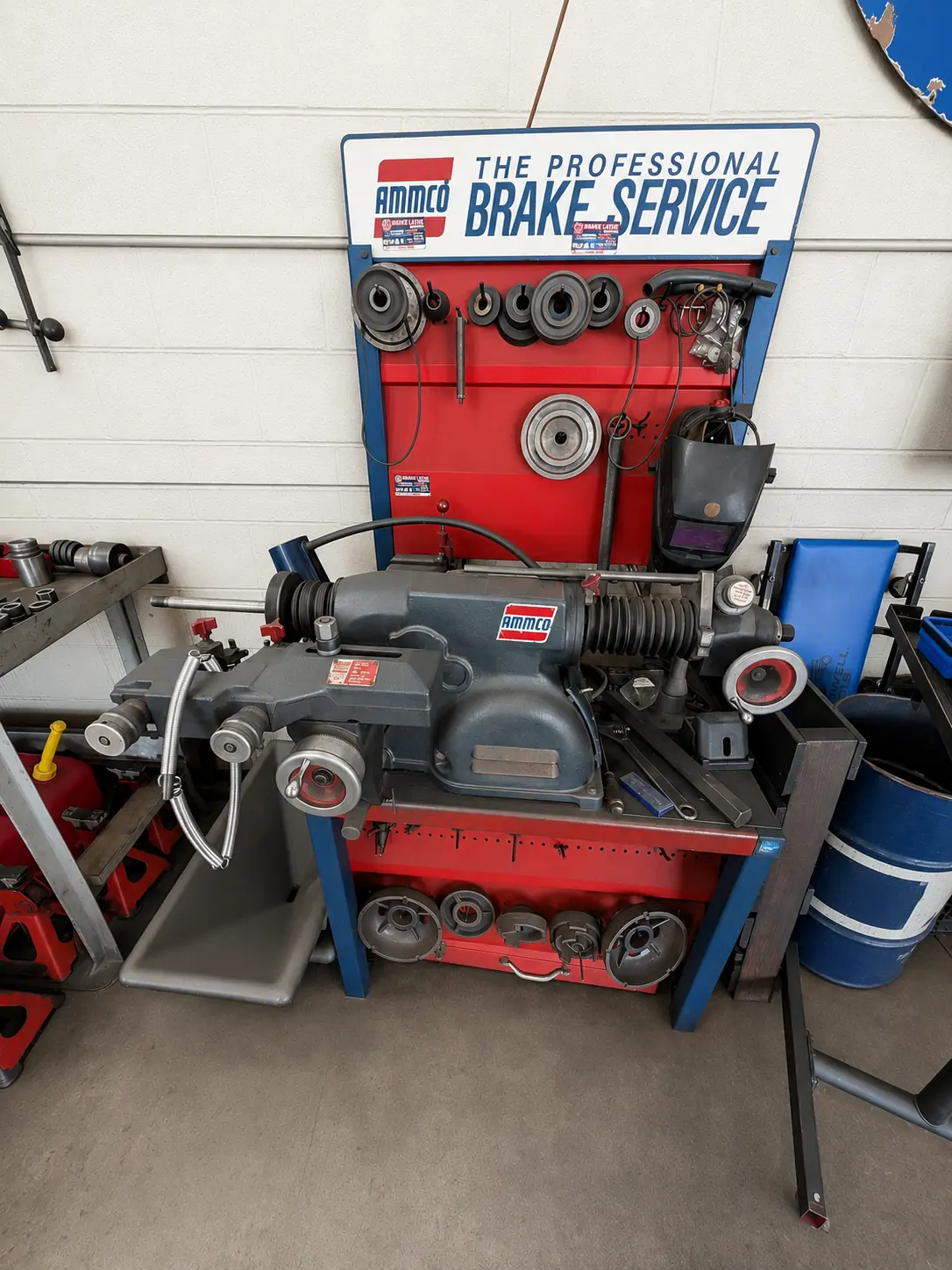
- Rotor resurfacing on our in-house brake lathe, or rotor replacement when resurfacing is not within specification
- Calipers, wheel cylinders, hoses and hardware
- Brake fluid exchange
- ABS and brake warning light diagnosis
- Parking brake service
Resurface or replace?
A rotor can only be resurfaced if it will still be above the manufacturer’s minimum thickness afterward. We measure first. If the rotors are within specification, resurfacing gives new pads a true surface to bed against. If they are not, we will show you why replacement is the safe choice.
Hybrid and electric vehicle brakes
Hybrids and EVs use regenerative braking, so pads often last longer, but calipers and hardware can seize from lack of use. Regular inspection matters on these vehicles even when the pads look fine.